How autonomous scrubbers support modern mall operations
A practical guide to selecting and deploying autonomous floor-cleaning robots for shopping malls and high-traffic retail facilities in the UAE.
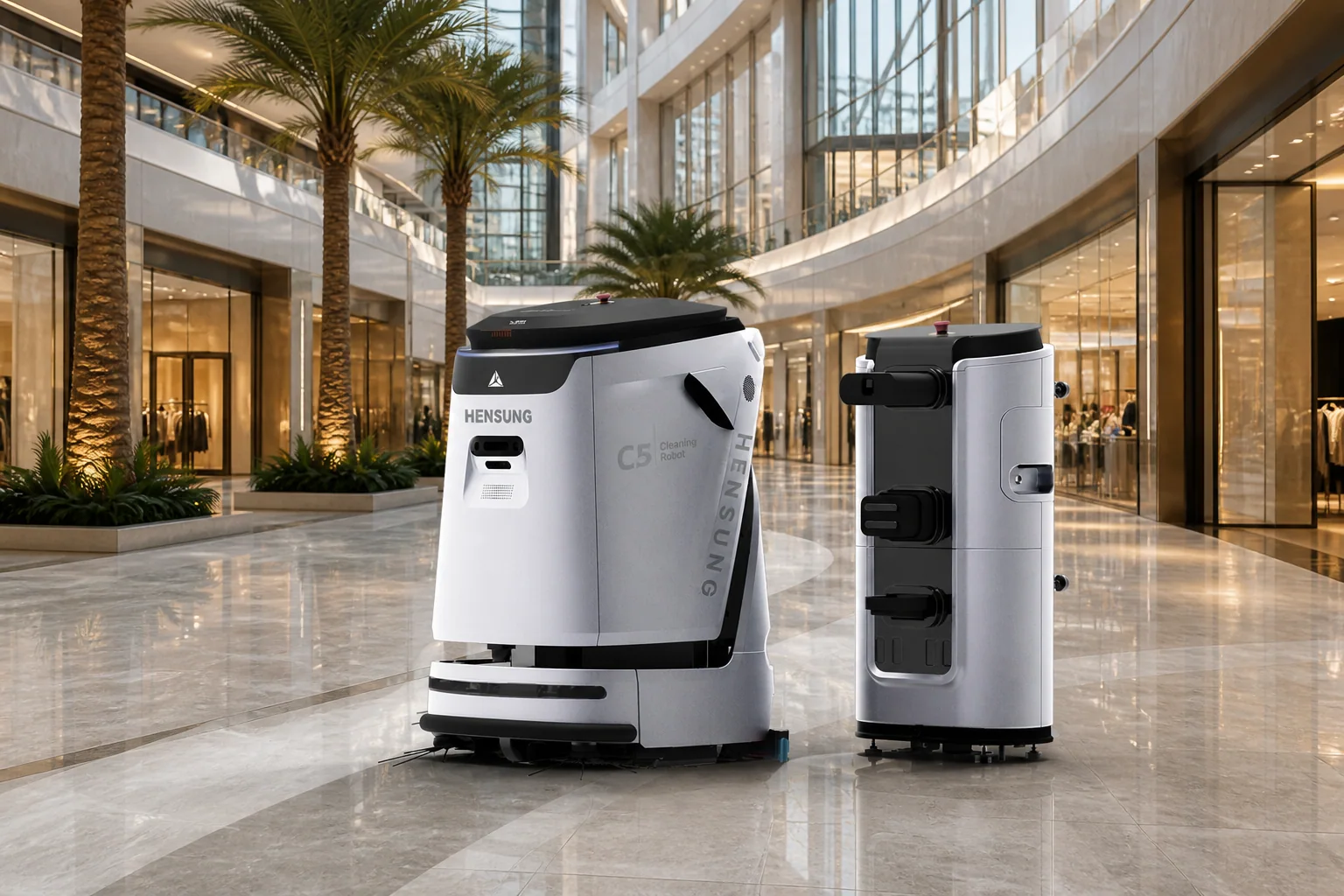
Autonomous scrubbers support repeatable floor-care routes across mall concourses, atriums and service areas. The robot is only one part of the operating model: the route, floor type, pedestrian flow, docking plan and local service process determine whether automation works reliably.
Match the robot to the floor and traffic pattern.
Large open concourses and compact retail corridors have different requirements. A site assessment should document surface type, cleaning width, turning space, thresholds, lifts, public operating hours and the locations where staff need to take over.
C5 is presented for large commercial floor-care workflows with automated charging and water-system servicing. SW55 provides waterless multi-surface care, while J20 is designed for lower-profile indoor cleaning in smaller spaces. The right choice depends on the real facility rather than a generic product category.
Plan the complete cleaning workflow.
- Map routes around opening hours and live pedestrian movement
- Confirm docking, charging and water-service requirements
- Define staff handover, exception handling and reporting
- Pilot the route before expanding to a larger fleet
What should a mall operator ask before a demo?
Ask the integrator to demonstrate the actual floor type, expected route, obstacle response, edge coverage, docking process and operator handover. A useful pilot should show how the robot fits the cleaning team and how local support will respond when site conditions change.